
Expect Drama from Market Research—Literally
Having worked at advertising agencies for many years, this I know: clients love it when the agency comes in to give a presentation. They can’t wait. There’s always a buzz of anticipation. What will those crazy creatives come up with this time?
This, however, is not the feeling when the market research agency comes to present. Nobody is jazzed. Nobody shows up early. The prospect of another long, monotonous research presentation makes nobody’s heart beat faster.
Why is that? I suggest it’s because researchers, by and large, are terrible storytellers. In their effort to be as objective, scientific and thorough as possible, they tend to create endless PowerPoints thick with data but thin on humanity. How ironic, given that humanity, one way or another, is almost always the subject of the research being presented. Behind the data invariably lies a human need. The purpose of research is to shine a bright light on that need, and to elicit a creative response to meet it.
I would argue that another primary role of market research is to evoke empathy within the brand team for its customers. Good research enables marketers to feel what their customers feel. To understand their customers, yes. But also to feel what their customers feel. Because at the end of the day, what people feel is what drives their decision-making. Let’s call this essential output of market research “strategic empathy.”
Case in point: Operation Bear Hug
In the early 1990s, IBM was in crisis. Most analysts agreed that the company as it then existed—a technology integrator offering everything from giant data centers to consumer printers—couldn’t survive. When Lou Gerstner became CEO, everyone thought he’d have to dismantle the company and sell off the pieces. Instead, Gerstner launched Operation Bear Hug.
He sent his top 50 managers around the world to visit five customers each. The purpose of these visits wasn’t to sell. It was to listen. To listen to customer concerns and figure out how IBM could help. The direct reports of each of those executives then went out and did the same.
““Good research enables marketers to feel what their customers feel.””
Immediately, Operation Bear Hug led to important new discoveries. For example, managers learned that IBM’s large corporate clients were completely fascinated by the Internet but baffled about how to capitalize on it—remember, this was the early 90s. The company recognized it could make a huge impact on its customers’ businesses by providing the infrastructure they needed to harness the power of the Web. The resulting e-business initiative was hugely successful.
Operation Bear Hug helped transform IBM from arrogant and insular to outward-facing and forward-looking. By Gerstner’s second year as CEO, the company was back in the black and had embarked upon a decade-long run of double-digit growth. The catalyst of this amazing turn-around was nothing more than sitting down with customers and trying to understand what they needed…in other words, the power of strategic empathy.
Creating strategic empathy through Brand Improv
The people at IBM probably didn’t think of Operation Bear Hug as market research—but it was. In fact, it was the best kind of market research. The kind that enables business decision-makers to get close to their customers and feel what they feel. The kind that helps them to see new opportunities for responding to their needs. Empathy is the ultimate market research deliverable, and delivering on empathy is what Brand Improv is all about.
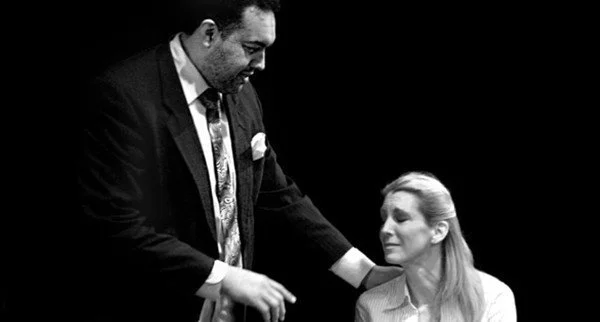
Brand Improv is a research-to-strategy workshop methodology intended to help brand teams empathize with their customers and respond creativity to their needs. Usually, they are given as one-day workshops in rented theatre space with a small team of researchers, brand marketers and professional actors. The actors are carefully prepped in advance, and translate a defined set of market research insights into dramatic scenarios that unfold right before the eyes of the brand team. The idea is to make the insights come alive, to make them as experiential as possible and create empathy within the brand team for their customers and the situations they face.
Typically, Brand Improv workshops are documented by a production crew that films the events of the day as they unfold in real time. Afterward, a concise edited version can be created. The goal is to deliver an immersive experience not only for the team present at the workshop, but for all those throughout the organization that will benefit from the outputs.
The idea is to make the insights come alive,
to make them as experiential as possible
While Brand Improv is an important new tool in the researcher’s repertoire, it does have potential pitfalls. The improvisations will only be as rich as the insights they are based on. Also, actors are experts at conveying human dynamics, but they are not subject matter experts. If scenarios stray into overly technical subject matter they will quickly lose credibility. Finally, care must be taken to position Brand Improv to the brand team in a non-threatening way. The role for researchers is to facilitate strategic development, not usurp it. That said, this kind of innovation extends the traditional role of researchers beyond mere custodians of data. By using Brand Improv and tools like it, they can begin to act as curators of insight experiences that create strategic empathy and serve as wellsprings of creative thinking.
And they can finally get their colleagues to actually look forward to research presentations.